Roseville :(916) 630-7633

Getting a tooth pulled isn’t the hard part — what happens in the next 24 to 72 hours is what determines how smoothly your recovery goes. Whether you just had a tooth extraction in Roseville or you’re preparing for one, knowing exactly what to do and what not to do can mean the difference between a quick, uneventful recovery and a painful complication like dry socket.
This guide walks you through practical, dentist-approved aftercare steps so your mouth heals the right way.
The First 24 Hours: What to Prioritize
The first day after your extraction is the most critical window for healing. Your body is working hard to form a blood clot in the empty socket — and that clot is everything. It protects the underlying bone and nerve tissue while new tissue grows in.
Do these things right away:
- Bite firmly on the gauze pad your dentist placed and keep steady pressure for 30–45 minutes
- Rest with your head elevated — lying flat increases blood flow to the area and can prolong bleeding
- Apply an ice pack to the outside of your cheek in 20-minute intervals for the first few hours to reduce swelling
- Take any prescribed medications or over-the-counter pain relievers (such as ibuprofen) as directed
Avoid these entirely in the first 24 hours:
- Spitting forcefully or using straws — the suction can dislodge the clot
- Smoking or vaping — nicotine significantly impairs clot formation and slows tissue healing
- Rinsing your mouth aggressively
- Hot liquids or crunchy foods near the extraction site
These aren’t arbitrary rules. Each one exists to protect the blood clot while it stabilizes.
Days 2 Through 7: Supporting the Healing Process
After the first day, the acute phase passes — but your socket is still fragile. Soft tissue and bone need roughly one to two weeks to begin meaningful healing, and full socket closure typically takes a few months.
Eating after a tooth extraction
Stick to soft foods that don’t require much chewing: mashed potatoes, scrambled eggs, yogurt, oatmeal, smoothies (no straw), and well-cooked vegetables. Gradually reintroduce more textured foods as comfort allows. Avoid anything hard, sticky, or crunchy near the extraction site.
Oral hygiene around the extraction site
Keeping your mouth clean is essential, but you need to be gentle. Starting the day after your procedure, rinse softly with a warm saltwater solution (½ teaspoon of salt dissolved in 8 ounces of warm water) after meals. This helps clear food debris without disturbing the healing tissue. Brush your other teeth normally, but avoid brushing directly over the socket for the first few days.
Managing swelling and discomfort
Some swelling and mild discomfort in the days following your extraction is completely normal. Swelling often peaks around 48–72 hours and then gradually subsides. Continue using ice on day one, and switch to gentle warm compresses from day two onward if swelling persists. If your dentist prescribed antibiotics, complete the full course even if you feel fine.
What Is Dry Socket — and How Do You Avoid It?
Dry socket (alveolar osteitis) is one of the most common complications after a tooth extraction. It occurs when the protective blood clot either dissolves too early or fails to form properly, leaving the underlying bone exposed.
Symptoms typically appear two to four days after extraction and include:
- Intense, throbbing pain that radiates toward the ear or jaw
- A visible empty or grayish-looking socket
- Bad breath or an unpleasant taste in the mouth
Risk factors include smoking, using straws, poor oral hygiene, and a history of dry socket. Women taking oral contraceptives also have a slightly elevated risk, according to research published in dental literature.
If you notice any of these signs, contact your dental office right away. At Tooth By Sunny Badyal, we’re here to help — don’t wait it out. Dry socket is treatable, but early intervention makes a significant difference in your comfort.
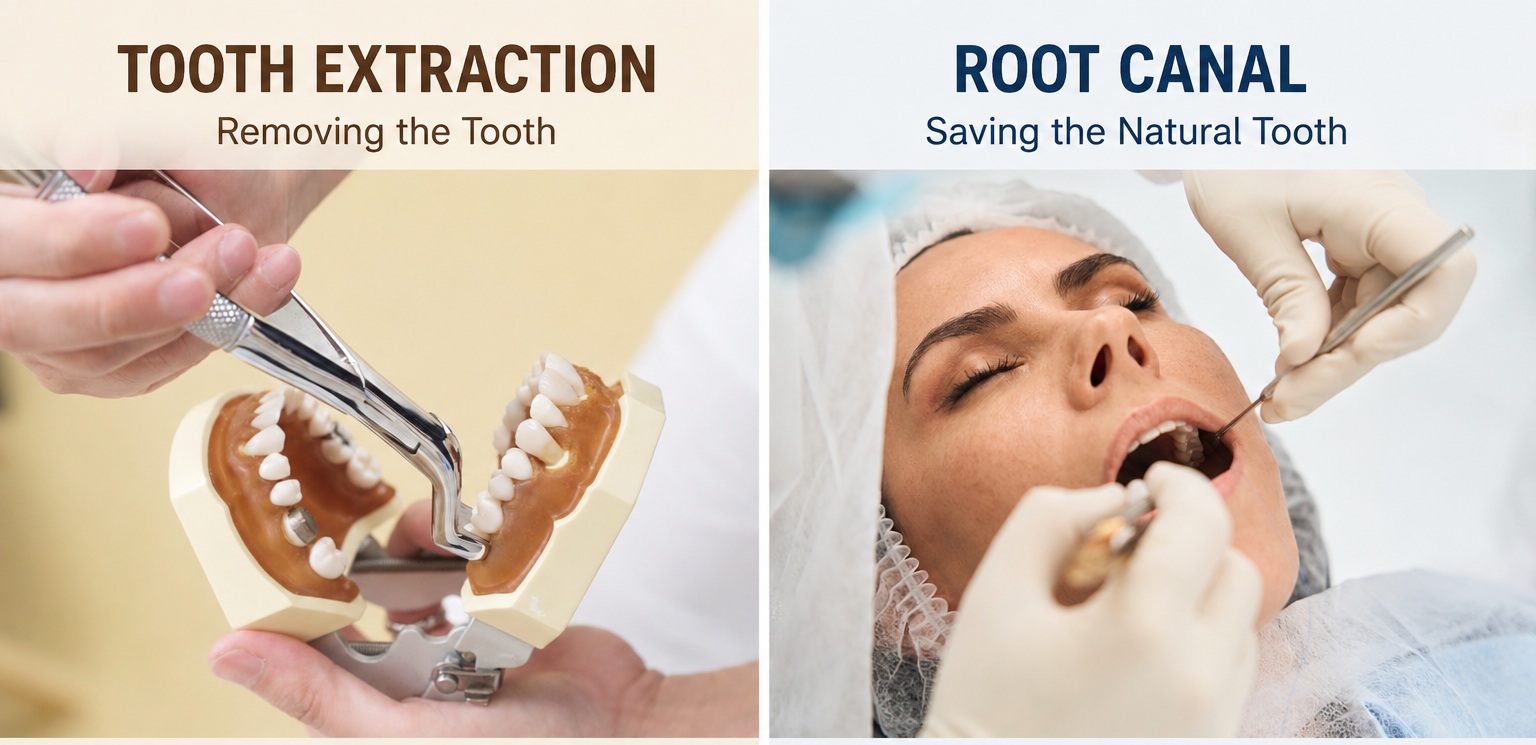
For a broader understanding of when an extraction is recommended versus alternative options like saving the tooth, our article on root canal vs. tooth extraction breaks down the decision clearly.
When to Call Your Dentist
Most extractions heal without complications, but certain signs warrant a call to your nearest dental provider. Reach out if you experience:
- Bleeding that doesn’t slow after an hour of firm gauze pressure
- Fever above 101°F
- Pus or discharge from the socket
- Worsening pain after the third day instead of improvement
- Swelling that’s getting worse, not better, after 48–72 hours
- Numbness or tingling that persists after the anesthesia should have worn off
These could indicate infection, a retained root fragment, or a reaction to medication — all of which need professional evaluation.
What to Expect from Full Recovery
Here’s a general timeline most patients can expect:
| Timeframe | What’s Happening |
|---|---|
| Day 1 | Blood clot forms; some oozing and swelling is normal |
| Days 2–3 | Swelling peaks; soft tissue begins initial repair |
| Days 4–7 | Discomfort reduces significantly; gum tissue starts to close |
| Weeks 2–4 | Gum tissue fully closes over the socket |
| 3–6 months | Underlying bone fills in and remodels completely |
Everyone heals at a slightly different pace depending on age, the complexity of the extraction, overall health, and how well aftercare instructions are followed.
Thinking About What Comes Next?
Once your socket heals, you’ll want to think about replacing the missing tooth — especially if it was a molar or a visible front tooth. Leaving a gap too long can cause neighboring teeth to shift, which affects your bite and can create additional dental problems over time.
Options worth discussing with your dentist include dental implants, bridges, or partial dentures, depending on your specific situation. Our tooth extraction services page outlines what patients can expect before, during, and after the procedure, along with the next steps for tooth replacement.
Local Tip for Roseville Patients
If you’re recovering from a tooth extraction in Roseville and have any questions about your healing, don’t hesitate to reach out directly. Our office is conveniently accessible to patients across the Sacramento area. You can find us and get directions on Google Maps.
Conclusion
Recovery from a tooth extraction doesn’t have to be difficult. Protect the blood clot in those first critical hours, eat soft foods, keep your mouth gently clean, and pay attention to how your body responds. Most patients feel meaningfully better within a few days.
If you’re preparing for a tooth extraction in Roseville or have concerns about how your current recovery is going, the team at Tooth By Sunny Badyal is ready to help. We take aftercare seriously — because your long-term oral health depends on it.
FAQs
Q1: How long does it take to heal after a tooth extraction?
Initial soft tissue healing typically takes 1–2 weeks, with the gum fully closing over the socket within 2–4 weeks. Complete bone healing in the socket can take 3–6 months depending on the complexity of the extraction and your overall health.
Q2: What should I eat after a tooth extraction?
Stick to soft foods for the first several days — yogurt, mashed potatoes, scrambled eggs, oatmeal, and smoothies (without a straw). Avoid hard, sticky, or crunchy foods near the extraction site until your dentist gives you clearance to return to a normal diet.
Q3: How do I know if I have dry socket?
Dry socket usually appears 2–4 days after extraction and causes intense, throbbing pain that may radiate to the ear or jaw. You may also notice a bad taste or smell, or see an empty-looking socket instead of a dark clot. Contact your dentist promptly if these symptoms develop.
Q4: Is it normal to have bleeding after a tooth extraction?
Some mild oozing is expected for the first few hours. Bite firmly on gauze with steady pressure to help it stop. If active bleeding continues beyond 1–2 hours or is heavy, contact your dental office. Avoid spitting, rinsing forcefully, or using a straw, as these can disturb clot formation.
Q5: Can I brush my teeth after a tooth extraction?
Yes — but carefully. You can brush your other teeth normally starting the day after your extraction. Avoid brushing directly over the extraction site for the first few days. Beginning the day after the procedure, rinse gently with a warm saltwater solution after meals to keep the area clean.