Roseville :(916) 630-7633

Replacing missing teeth involves more than choosing an artificial tooth. The right option depends on how many teeth are missing, the condition of your remaining teeth, jawbone support, maintenance requirements, and budget. At Tooth By Sunny Badyal’s Yuba City dental office, patients can explore dental implant treatment and other restorative options based on their oral health needs.
What is the difference between dentures, dental implants, and bridges?
Dentures are removable appliances, dental implants are placed in the jawbone to support replacement teeth, and dental bridges replace missing teeth by attaching to neighboring teeth or implants. Each option has different requirements for placement, maintenance, and long-term care.
The following table summarizes the main differences.
| Feature | Dentures | Dental implants | Dental bridges |
|---|---|---|---|
| How they work | Removable artificial teeth | Jawbone-supported posts with crowns or other restorations | Artificial teeth supported by natural teeth or implants |
| Best suited for | Replacing several or all missing teeth | Replacing one or more missing teeth | Replacing one or more teeth within a suitable gap |
| Removable | Yes, for conventional dentures | The implant stays in place; the restoration may vary | Usually fixed if supported by natural teeth |
| Effect on adjacent teeth | Usually no preparation of neighboring teeth | Usually does not require neighboring teeth for support | A conventional bridge generally requires preparation of supporting teeth |
| Main consideration | Fit, stability, and daily cleaning | Surgery, healing, and adequate bone support | Health and strength of supporting teeth |
The table provides general guidance. Your dentist must assess your mouth before recommending a specific restoration.
When are dentures the right choice for missing teeth?
Dentures may be suitable when you need to replace several missing teeth or an entire upper or lower arch without placing an implant for every replacement tooth. The choice depends on the number of remaining teeth, oral anatomy, and ability to maintain a secure fit.
There are two main types:
- Partial dentures: Removable appliances that replace selected missing teeth while fitting around remaining natural teeth.
- Complete dentures: Removable appliances that replace all teeth in the upper jaw, lower jaw, or both.
Dentures can replace multiple teeth without implant surgery. However, their fit may change as the gums and jawbone change over time. Some patients experience movement while chewing or speaking and may need adjustments, relining, or replacement.
Daily cleaning is essential. The American Dental Association recommends cleaning dentures regularly and storing them in water or an appropriate denture-cleaning solution when they are not being worn, according to the manufacturer’s instructions. Hot water can distort the appliance.
When should you consider dental implants?
Dental implants may be appropriate if you want a fixed tooth replacement and have sufficient jawbone support or can undergo procedures to address inadequate bone. Your medical history, gum health, tobacco use, and ability to heal also affect eligibility.
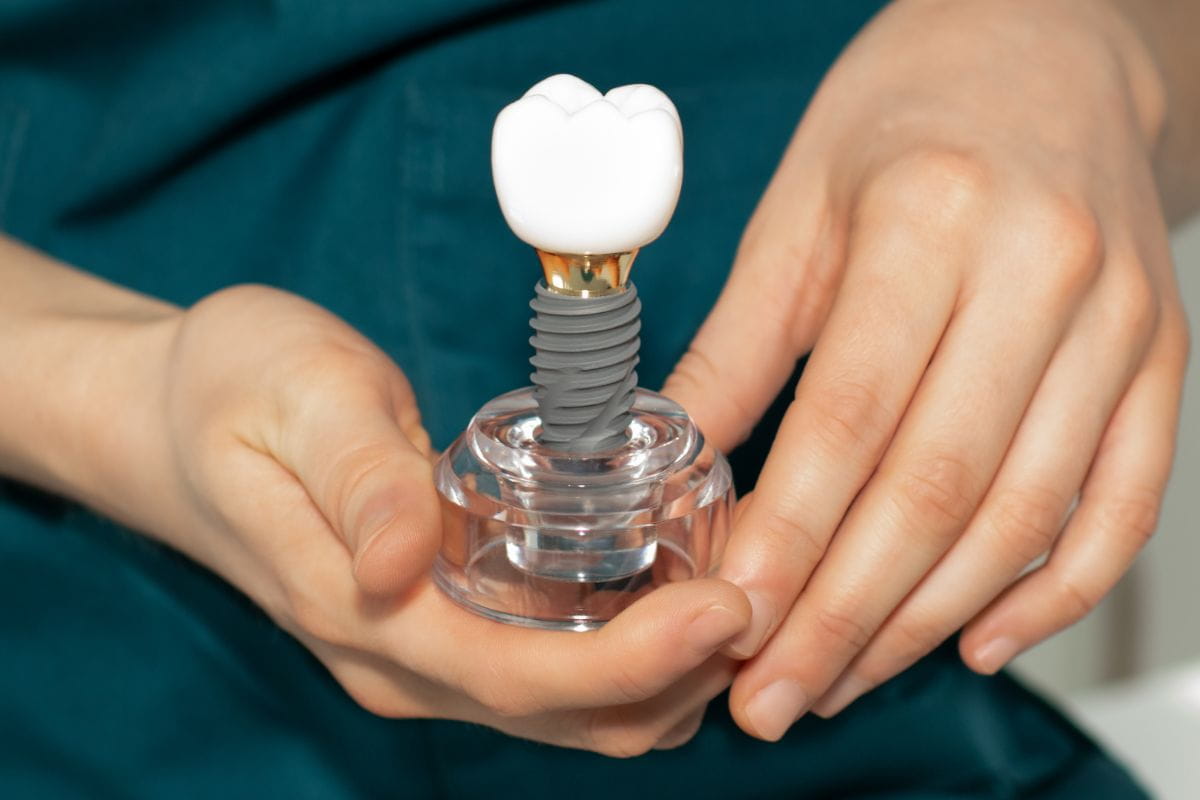
A dental implant is a post, commonly made from titanium, placed in the jawbone. After healing and integration with the bone, it can support a custom crown, bridge, or denture.
Implants offer several practical benefits:
- They can replace a single missing tooth without relying on neighboring teeth for support.
- They can support restorations that replace multiple missing teeth.
- They help maintain function by transferring chewing forces to the jawbone.
- They require ongoing brushing, cleaning between teeth, and professional dental care.
Implant treatment requires surgery and healing. Integration may take several months, depending on the patient’s condition and treatment plan. Some patients also need bone grafting before implant placement.
Implants are not automatically the best choice for everyone. Conditions affecting healing, uncontrolled gum disease, inadequate bone support, and tobacco use may affect treatment suitability. A dental examination and appropriate imaging help determine whether implant treatment is feasible.
When is a dental bridge a better option?
A dental bridge may be suitable when one or more missing teeth leave a gap and the adjacent teeth or dental implants can provide adequate support. A conventional bridge is fixed in place and does not need to be removed for daily cleaning. MouthHealthy+1
A conventional dental bridge uses supporting teeth on either side of a gap. The dentist prepares those teeth to hold crowns connected to the artificial replacement tooth. An implant-supported bridge instead attaches to dental implants.
A bridge can restore chewing function and fill the visible space left by missing teeth. It may also be an option when a patient prefers to avoid implant surgery or is not a suitable implant candidate.
The main consideration is support. A conventional bridge often requires removing some enamel from the neighboring teeth, even if those teeth are otherwise healthy. Its long-term success also depends on the condition of the supporting teeth and the patient’s ability to clean around the bridge.
Ask your dentist which bridge design fits your situation and how to clean underneath it.
How do cost, treatment time, and maintenance compare?
The total cost and treatment time depend on the restoration type, number of teeth replaced, preparatory procedures, materials, and insurance coverage. Request a personalized estimate rather than relying on a single advertised price.
These factors help explain the practical differences:
- Initial cost: Conventional dentures may have a lower initial cost than implant treatment. Implants may require additional expenses for surgery, bone grafting, and the final restoration.
- Treatment time: Dentures and bridges can sometimes be completed without the extended healing required for implants. Implant treatment may take several months because the implant needs time to integrate with the jawbone.
- Maintenance: Dentures need daily removal and cleaning. Bridges require careful cleaning around supporting teeth and beneath the replacement tooth. Implants require daily oral hygiene and regular professional monitoring.
- Future adjustments: Dentures may need relining or replacement as the mouth changes. Bridges and implant restorations may also need repair or replacement over time.
Exact fees, insurance benefits, and treatment timelines vary. Ask for an itemized estimate that includes examinations, imaging, laboratory fees, preparatory procedures, and follow-up care. The American Dental Association’s guidance on dentures explains the importance of proper fit and ongoing maintenance.
How do you choose the right tooth replacement?
The right tooth replacement is the option that meets your functional needs while accounting for your oral health, anatomy, budget, and maintenance preferences. A dental examination helps determine which treatments are clinically appropriate.
Consider these questions when discussing your options with a dentist:
- How many teeth need replacement, and where are they located?
- Are the neighboring teeth healthy enough to support a conventional bridge?
- Is there enough jawbone to support dental implants?
- Would removable dentures or a fixed restoration better suit your daily needs?
- What are the estimated initial costs and likely future maintenance requirements?
Patients missing most or all of their teeth may also consider implant-supported dentures, which combine a denture with implant support. This approach can improve stability compared with conventional removable dentures, although eligibility and design vary.
To learn more about the practice’s approach to restorative care, read how Tooth By Sunny Badyal approaches dental treatment.
Where can you discuss tooth replacement options in Yuba City?
Tooth By Sunny Badyal offers restorative dental services in Yuba City, where you can ask about dentures, bridges, and dental implants. The dentist can assess your missing teeth and explain the options appropriate for your condition.
Visit the contact page or call the Yuba City office to ask about an appointment.
Bring any previous dental records and prepare questions about treatment steps, costs, healing, and long-term maintenance. The final recommendation should be based on your examination and informed discussion of the available options.
FAQs
Are dental implants better than dentures?
Dental implants may provide greater stability, but conventional dentures can be appropriate for patients who need removable tooth replacement or cannot undergo implant treatment.
Which is more affordable: dentures, implants, or bridges?
Conventional dentures often have a lower initial cost, but the total expense depends on treatment complexity, materials, insurance coverage, and future maintenance.
Can a dental bridge replace multiple missing teeth?
Yes, a dental bridge can replace one or more missing teeth when the supporting natural teeth or implants can adequately support the restoration.
How long does dental implant treatment take?
Dental implant treatment may take several months because the implant often needs time to integrate with the jawbone before the final restoration is attached.
Can you switch from dentures to dental implants?
Yes, some denture wearers can transition to implant-supported restorations after an assessment of their bone support, gum health, and overall medical suitability.