Roseville :(916) 630-7633

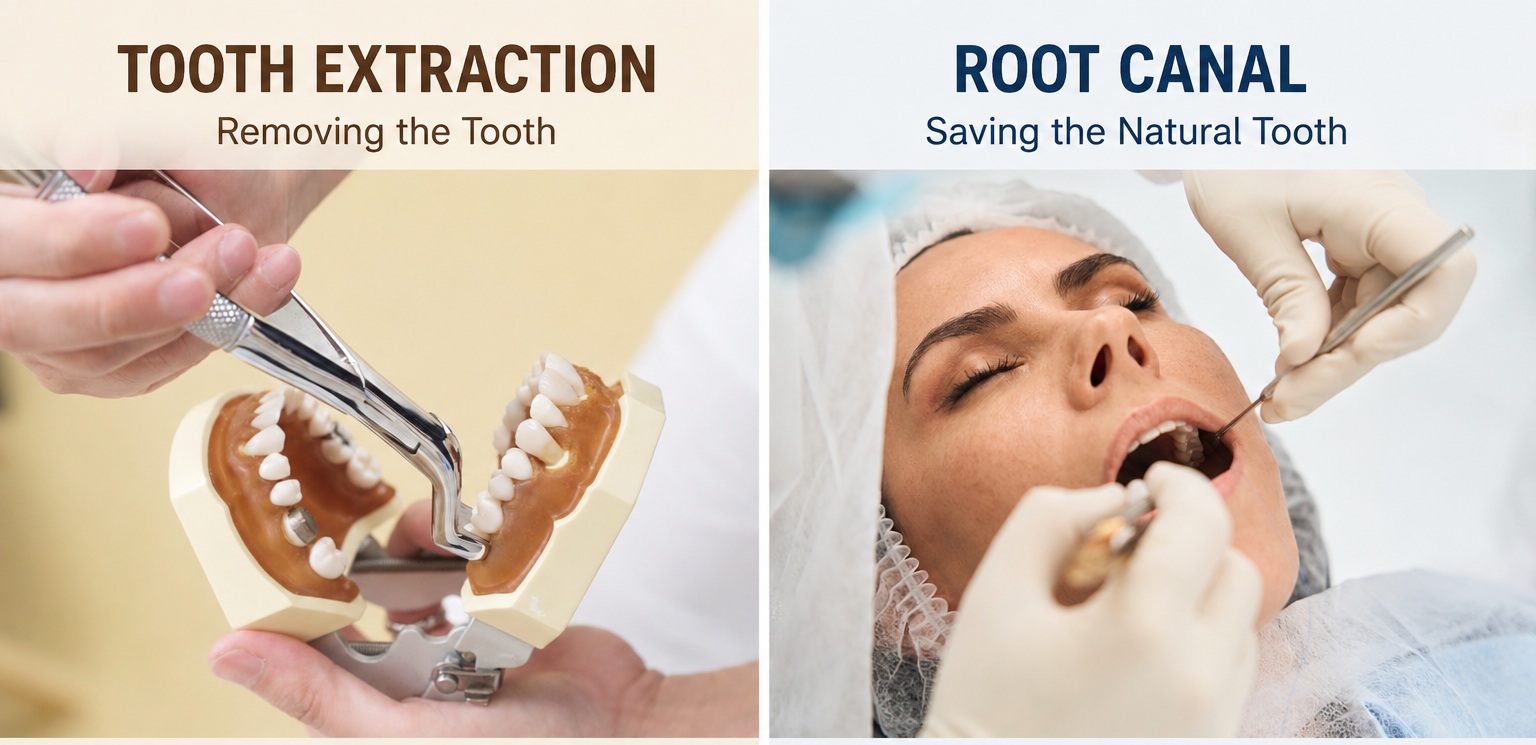
Waking up with a throbbing toothache or feeling sharp pain when you sip coffee can be incredibly stressful. Your mind immediately starts racing through the possibilities, wondering if the tooth can be saved or if it needs to come out entirely.
Choosing between a root canal and a tooth extraction depends on the extent of damage to the tooth’s structure and the health of the surrounding bone. Generally, a root canal is the preferred choice as it preserves your natural tooth, maintains jawbone density, and prevents neighboring teeth from shifting. However, if the tooth is fractured below the gum line or severely decayed, a professional tooth extraction in Roseville may be the most predictable way to eliminate infection and protect your overall oral health.
At Tooth By Sunny Badyal, Dr. Sunny Badyal focuses on conservative dentistry that prioritizes your long-term comfort and functional bite. If you are currently dealing with dental pain, we invite you to schedule a consultation with our team to explore the best path forward for your smile.
What Is the Difference Between a Root Canal and a Tooth Extraction?
A root canal removes infected tissue from inside the tooth while keeping the outer structure intact. After cleaning and sealing the tooth, a dental crown is often placed to restore strength and function.
A tooth extraction removes the entire tooth from the mouth, including the root. Depending on the situation, the missing tooth may later need replacement with a dental implant, bridge, or denture.
Patients searching for root canal vs tooth extraction are often trying to understand which option offers better long-term results. The truth is that both procedures serve different purposes.
Root Canal Treatment Focuses on Saving the Tooth
A root canal may be recommended when:
- The tooth structure remains stable
- Infection has not severely damaged the surrounding bone
- Cracks do not extend below the gumline
- The tooth can still support normal chewing
Saving the natural tooth helps preserve jaw support and maintain bite balance.
Tooth Extraction: Removes a Tooth That Cannot Be Predictably Saved
Extraction may become necessary when:
- The tooth is severely fractured
- Infection has spread deeply into the bone
- Gum disease has loosened the tooth
- Previous restorations have repeatedly failed
- Large areas of decay compromise the structure
In some situations, removing the tooth prevents ongoing infection and protects nearby teeth.
How Do Dentists Decide Between Saving or Removing a Tooth?
The decision is rarely based on pain alone. Dental imaging, bone support, gum health, and structural stability all influence treatment recommendations.
When discussing saving a tooth vs pulling a tooth, dentists evaluate several important factors:
Amount of Remaining Healthy Tooth Structure
If enough healthy tooth remains above the gumline, restoration may still be possible. Severely broken teeth often lack enough support for a long-lasting crown.
Severity of the Infection
A tooth infection that remains localized may respond well to root canal treatment. However, advanced infections sometimes destroy surrounding bone and reduce long-term success.
Condition of the Surrounding Bone
A healthy jawbone supports both the tooth and nearby structures. Bone loss may shift the recommendation toward extraction.
Long-Term Function
Back molars handle significant chewing pressure. If a weakened tooth cannot predictably withstand long-term force, extraction may provide a safer solution.
Is It Better to Save a Natural Tooth Whenever Possible?
In many situations, yes. Natural teeth help maintain normal chewing patterns and support healthy jaw alignment.
A successful root canal allows patients to keep their original tooth structure while preventing infection from spreading. This is why many dentists prefer preservation when realistic long-term success is possible.
Patients researching root canal treatment vs removing a tooth often discover that keeping a natural tooth can reduce future complications related to shifting teeth and bite imbalance.
However, saving a tooth should not come at the expense of long-term health. A heavily damaged tooth that repeatedly becomes infected may eventually create larger oral health concerns.
What Happens If You Leave a Missing Tooth Untreated?
This is one of the most overlooked concerns when considering extraction.
Missing teeth affect far more than appearance. Over time, neighboring teeth begin shifting into the empty space. Bite pressure changes. Uneven wear develops. Jawbone volume may gradually shrink in the area where the tooth once existed.
Patients considering dental extraction or root canal treatment should understand these long-term effects before making a decision.
Potential Problems After Untreated Tooth Loss
- Shifting teeth
- Bite misalignment
- Jawbone deterioration
- Increased pressure on nearby teeth
- Difficulty chewing evenly
- Changes in facial support over time
For many patients considering tooth extraction in Roseville, discussing tooth replacement options early helps prevent future complications.
Does a Root Canal Hurt More Than an Extraction?
Modern dentistry has changed both procedures significantly. With proper anesthesia, most patients feel pressure rather than sharp pain during treatment.
In fact, many people report that root canals feel similar to receiving a dental filling.
The discomfort patients experience usually comes from the infection itself, not the treatment.
Recovery Differences Between the Two Procedures
Root Canal Recovery
- Mild soreness for several days
- Normal chewing often returns quickly
- Final crown placement restores strength
Extraction Recovery
- Swelling may occur temporarily
- Bone and gum healing takes longer
- Tooth replacement planning may follow
Patients comparing extraction vs root canal treatment often feel surprised that both procedures are generally manageable with modern techniques.
Can Every Infected Tooth Be Saved With a Root Canal?
No. Some teeth become too damaged structurally to support successful restoration.
Examples include:
- Vertical root fractures
- Severe decay below the gumline
- Advanced bone loss
- Deep cracks extending into the root
- Repeated failed root canal treatments
In these situations, extraction may provide the healthiest long-term outcome.
This is why patients searching for root canal or extraction should avoid self-diagnosing online. Proper imaging and clinical evaluation are essential before deciding.
Why Early Treatment Often Creates Better Outcomes
Dental infections rarely improve without professional care. Delaying treatment often increases pain, damage, and cost over time.
Many patients seeking tooth extraction initially hoped the discomfort would disappear naturally. Unfortunately, infections usually continue spreading beneath the surface.
Early care often allows:
- Smaller restorations
- Better preservation of natural teeth
- Less extensive procedures
- Reduced risk of bone loss
- Faster healing
Addressing symptoms early can significantly improve your treatment options.
Protect Your Smile Before the Problem Gets Worse
Severe tooth pain can feel overwhelming, but waiting usually limits your options. The right treatment depends on the condition of the tooth, surrounding bone health, and your long-term oral function.
At Tooth By Sunny Badyal, Dr. Badyal takes time to explain whether preserving the tooth or removing it offers the healthiest outcome for your smile. If you are experiencing pain, swelling, or signs of infection, schedule a consultation today and let our team help you move forward with clarity and confidence.
FAQs
Is a root canal safer than pulling a tooth?
Both procedures are considered safe when performed properly. Root canals preserve the natural tooth, while extractions remove severely damaged teeth that may threaten surrounding oral health.
What is the lifespan of a tooth that has undergone a root canal treatment?
Many root canal-treated teeth last for decades with proper care, regular cleanings, and a protective dental crown when recommended.
Can I eat normally after a tooth extraction?
Most patients return to normal eating gradually within several days. Soft foods are recommended early during healing.
How do I know if my tooth can still be saved?
A dental exam and X-rays help determine whether enough healthy structure remains for long-term restoration success.
Can an extracted tooth be left as a gap?
It is not recommended. Leaving a gap leads to jawbone shrinkage and causes
surrounding teeth to shift out of place, which can eventually lead to further tooth loss
and bite complications.